

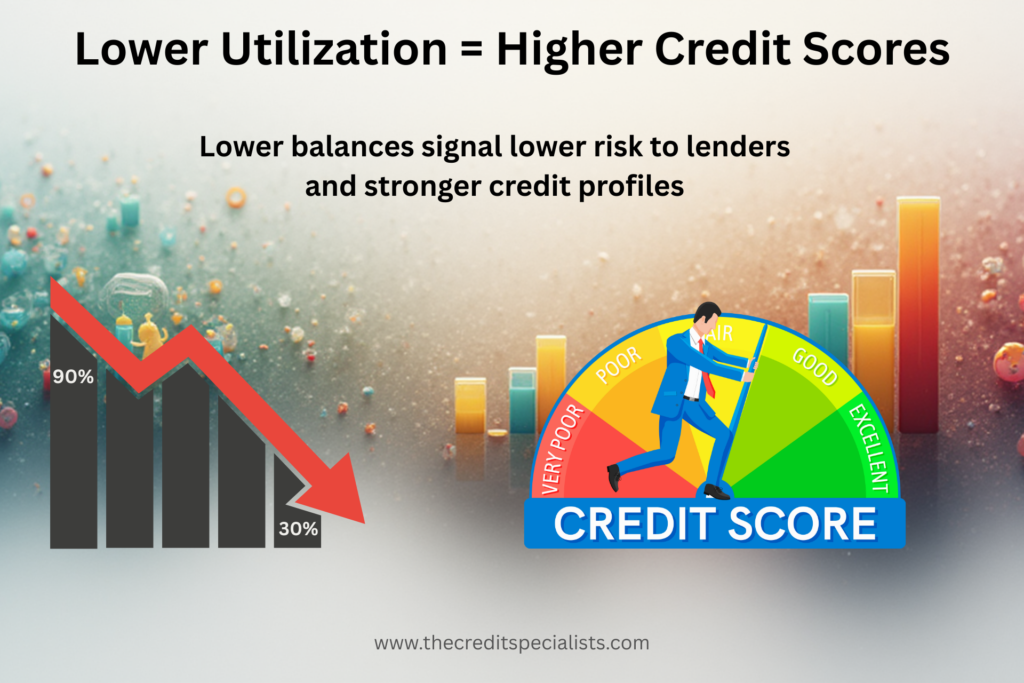
Credit utilization is one of the most misunderstood factors in credit scoring. Many people focus on paying off debt or closing credit cards, yet overlook how much of their available credit they are actually using. However, credit utilization plays a significant role in whether your score rises or falls.
Understanding how utilization works — and how to fix it — can make a noticeable difference in your credit score, sometimes faster than expected.
What Is Credit Utilization?
Credit utilization measures how much of your available credit you are using. It primarily applies to revolving accounts, such as credit cards.
For example:
If you have a $10,000 total credit limit
And you are using $3,000
Your utilization rate is 30%
Because credit utilization makes up about 30% of your credit score, it is one of the most influential factors after payment history.
Why High Credit Utilization Hurts Your Score
High utilization signals risk to lenders. Even if you pay your bills on time, using too much of your available credit can lower your score.
As a result:
Scores may drop when balances rise
Approval odds may decrease
Interest rates may increase
Additionally, high utilization often appears when people close old credit cards without realizing the impact.
👉 Related reading:
https://thecreditspecialists.com/why-closing-old-credit-cards-can-hurt-your-credit-score/
What Is the Ideal Credit Utilization Ratio?
Although there is no single “perfect” number, general guidelines help:
Under 30% – Good
Under 10% – Excellent
Over 50% – High risk
In contrast, maxed-out cards often lead to score drops, even if minimum payments are made.
How to Fix High Credit Utilization
Fortunately, credit utilization can be improved with consistent action.
1. Pay Down Balances Strategically
Focus on lowering balances below 30% of each card’s limit. Even small payments can help.
2. Avoid Closing Old Credit Cards
Closing cards reduces available credit and raises utilization instantly.
👉 Learn more here:
https://thecreditspecialists.com/why-closing-old-credit-cards-can-hurt-your-credit-score/
3. Spread Balances Across Cards
Instead of maxing out one card, distributing balances can lower individual utilization.
4. Request a Credit Limit Increase
If approved, your utilization drops without paying off debt — as long as spending stays the same.
Why Utilization Matters After Bankruptcy
After bankruptcy, utilization becomes even more critical. Many people rebuild credit quickly, but unknowingly damage their progress by carrying high balances.
Because lenders look at current behavior, keeping utilization low helps demonstrate control and responsibility.
👉 Learn more about rebuilding here:
https://thecreditspecialists.com/life-after-bankruptcy-your-first-90-days/
Final Thoughts
Credit utilization is not about how much debt you have — it’s about how much you use compared to what’s available. Because of this, understanding utilization can help you make smarter credit decisions and avoid unnecessary score drops.
If you’re unsure how utilization affects your specific credit profile, reviewing your report is the best first step.
👉 Start here:
https://subscribepage.io/AOMFtc